
Is your AC not cooling like it should during Reno’s first stretch of 95 to 100°F days? The most common causes are a clogged filter, a dirty or blocked outdoor unit, a thermostat setting, a tripped breaker, or a system that is simply running at its limit in high-desert heat. A healthy air conditioner typically cools a home roughly 15 to 20°F below the outdoor temperature, so 78 to 80° inside on a 100° afternoon is often normal, and the sections below will help you tell “working hard” from “something is wrong.”
What’s Normal for a Reno AC on a 100° Day
Reno sits at roughly 4,500 feet with very dry air, intense sun, and summer highs that often reach the mid-90s to 100°F or above. On those afternoons, most air conditioners are doing exactly what they were designed to do.
Generally normal on a very hot day:
- Running continuously. Systems are sized for typical summer conditions, not the hottest week of the year, so running all afternoon without cycling off is common on 100°+ days.
- Catching up overnight. Reno’s big day-to-night swing gives your AC a break. A comfortable house by morning is a good sign.
What is not normal: warm air from the vents, an outdoor unit that is not running at all, ice on the refrigerant lines, or indoor temperatures climbing while the system runs nonstop.
Why Is My AC Not Keeping Up? Start With These Quick Checks
Spend ten minutes on these checks before you call anyone. They resolve a surprising number of “AC not cooling” calls, and none of them require tools.
1. Thermostat settings
Confirm the thermostat is set to Cool and the fan is set to Auto, not On. With the fan on “On,” the blower pushes room-temperature air through the vents between cooling cycles, which feels like warm air. Also check for a low battery or a schedule someone changed.
2. Air filter
A clogged filter is the most common cause of weak cooling. Reno’s dust and pollen load filters quickly, and a restricted filter starves the system of airflow, which cuts cooling and can freeze the indoor coil. Hold the filter up to a light. If you cannot see through it, replace it.
3. Breaker and disconnect
If the outdoor unit is silent but the indoor fan is running, check your electrical panel for a tripped breaker, usually labeled AC, condenser, or HVAC, and the small disconnect box near the outdoor unit. Reset a tripped breaker once. If it trips again, stop and call, because repeated trips usually mean an electrical or compressor problem.
Check the Outdoor Unit, Vents, and Coil
4. Outdoor condenser
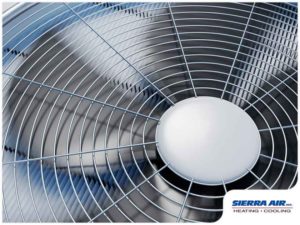
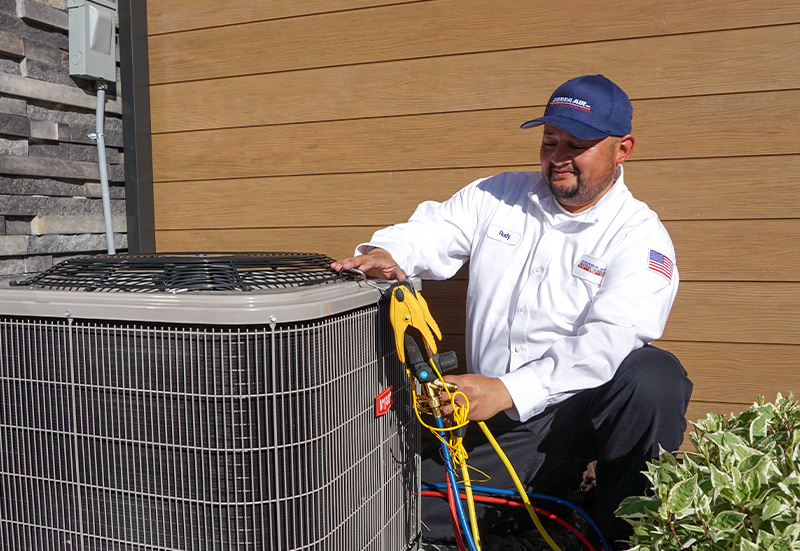
Your outdoor unit sheds heat through the thin metal fins on its sides, and those fins need clear airflow. Early summer in Reno means cottonwood fluff, and afternoon winds add dust, leaves, and grass clippings. Walk outside and look for:
- A mat of fluff or debris coating the coil fins
- Shrubs, fencing, or stored items within about two feet of the unit
- A top fan that is not spinning while the thermostat is calling for cooling
With the power off at the disconnect, gently rinse the fins with a garden hose on a soft setting. Skip the pressure washer, which bends the fins.
5. Closed or blocked vents
Closing vents in unused rooms does not save energy, and it can backfire by raising duct pressure and reducing airflow across the coil. Open every supply register and make sure return grilles are not blocked by furniture.
6. Signs of a frozen coil
Ice on the copper line, frost on the indoor coil, or water pooling around the indoor unit means the evaporator coil has frozen, usually from weak airflow or low refrigerant. Turn the system to Off, run the fan on On for a few hours to thaw it, replace the filter, then try again. If it freezes a second time, that is a service call.
Pro tip: Pick a reasonable setpoint in the morning and leave it there. Letting the house climb to 82° and then asking the AC to pull it back to 74° at 4 p.m. is the hardest thing you can ask of a system in Reno heat.
AC Not Cooling Enough on Hot Days? What Is Not a DIY Fix
If the basics check out and the house is still too warm, the problem is usually in the sealed refrigerant system or electrical components, and DIY should stop there.
- Low refrigerant. Refrigerant does not get “used up.” If it is low, there is a leak. Handling refrigerant legally requires EPA certification and proper recovery equipment, and topping it off without finding the leak is only a patch.
- Failed capacitor. The capacitor gives the compressor and fan motor the jolt they need to start. Heat is hard on capacitors, and a weak one often shows up as a humming outdoor unit with a fan that will not spin.
- Compressor problems. Hard starts, loud buzzing, or a breaker that keeps tripping can point to a failing compressor, which needs proper diagnosis before anyone talks about repair versus replacement.
- Duct leaks. Leaky attic ductwork dumps cooled air into a space far hotter than the outside air, a common reason a Reno AC runs all day and never catches up.
Safety note: Shut off power at the breaker and the outdoor disconnect before touching the condenser, and never open the electrical access panel on the unit itself. Capacitors hold a dangerous charge after the power is off. If anything smells hot or electrical, turn the system off and call.
When It’s Time to Call a Pro
Call sooner rather than later if you notice any of the following:
- Warm or room-temperature air from the vents while the system runs
- An outdoor unit that hums or buzzes but the fan does not spin
- A breaker that trips more than once
- Ice on the lines again after a thaw-and-restart
- Indoor temperature rising even though the system never shuts off
Early summer is the busiest season for AC repair across Reno and Sparks, and these problems rarely fix themselves. Sierra Air offers same-day service, our trucks are fully stocked, and our technicians explain your options before any work begins.
How Maintenance Prevents Mid-Summer Breakdowns
An AC not cooling on the hottest day of the year rarely broke that morning. A weak capacitor, a slow refrigerant leak, or a coil coated in last year’s dust can hide for months, then fail the first time the system runs from noon to midnight.
A professional AC maintenance visit catches these issues while they are small. A thorough tune-up cleans the condenser coil, checks refrigerant charge and electrical connections, tests the capacitor, and verifies airflow. ENERGY STAR’s maintenance checklist makes the same point: regular upkeep keeps a system running efficiently, and skipping it lets performance slide while energy use climbs.
If your system has not been serviced this year, our summer prep guide for Reno-area homeowners covers the essentials. A mid-June tune-up still protects you through July and August, plus the wildfire smoke season that can follow.
When Repair Is Not the Answer
Sometimes an air conditioner that cannot keep up is simply at the end of its working life. If your system is well past the 10 to 15 year mark, needs a major repair like a compressor, or still uses R-22 refrigerant, which is no longer manufactured, it may make more sense to put that money toward a new, properly sized system. Financing options can make a replacement manageable when the timing is not ideal.
Frequently Asked Questions
How cool should my house be when it is 100° outside in Reno?
Most residential air conditioners can hold an indoor temperature roughly 15 to 20°F below the outdoor temperature. On a 100° Reno afternoon, 78 to 82° inside is within the normal range, and the warmest reading often comes in the early evening as walls and attics release stored heat. If the house keeps getting warmer while the system runs, something needs attention.
Why is my AC not keeping up only in the afternoon?
Afternoon is when outdoor heat, direct sun on the roof, and a hot attic all peak at once. A system that keeps up in the morning and falls behind by 3 or 4 p.m. may simply be at capacity, though a dirty condenser coil, clogged filter, or leaky ducts will make that gap worse.
Is it bad for my AC to run all day?
Not necessarily. On the hottest days, continuous running is expected and is less stressful on the equipment than frequent starting and stopping. If the vent air is cold and the house holds steady, the system is doing its job. If it runs nonstop and the house still warms up, schedule a service call.
Can cottonwood fluff really stop my AC from cooling?
Yes. Cottonwood seeds drift through Reno-area neighborhoods in late spring and early summer and collect on the condenser coil fins like a blanket. That layer traps the heat the unit is trying to release, which reduces cooling and can push the compressor to overheat. Check your outdoor unit after windy days and gently rinse the fins with the power off.
Why is my AC not cooling but the fan is still running?
Air moving without any cooling usually means the outdoor unit is not running, the thermostat fan is set to On instead of Auto, the system is low on refrigerant, or the indoor coil has frozen. Check the thermostat and breaker first. If the outdoor unit is silent or iced over, turn the system off and call a technician.
Need Help Beating the Heat? Call Sierra Air
Sierra Air has kept Northern Nevada homes comfortable since 1986, and our team knows what Reno’s heat, dust, and elevation do to an air conditioner. We are rated 4.8 stars on Google by thousands of local customers, licensed in Nevada and California, and ready with same-day service across Reno, Sparks, Carson City, and the surrounding area. Call (775) 356-5566 or schedule service online, and we will get your home cool again.
Need Professional HVAC or Plumbing Help?
Our expert technicians are ready to assist you with any heating, cooling, or plumbing needs.